


As some of you know, I have a new book coming next month, co-authored with the Evangelical theologian Matthew Kaemingk. It’s called Can Religion Save Democracy? How More Faith—Not Less—Can Heal Our Public Life. Pre-orders make a big difference, so please consider getting your copy here at a 40% discount for a limited time only.
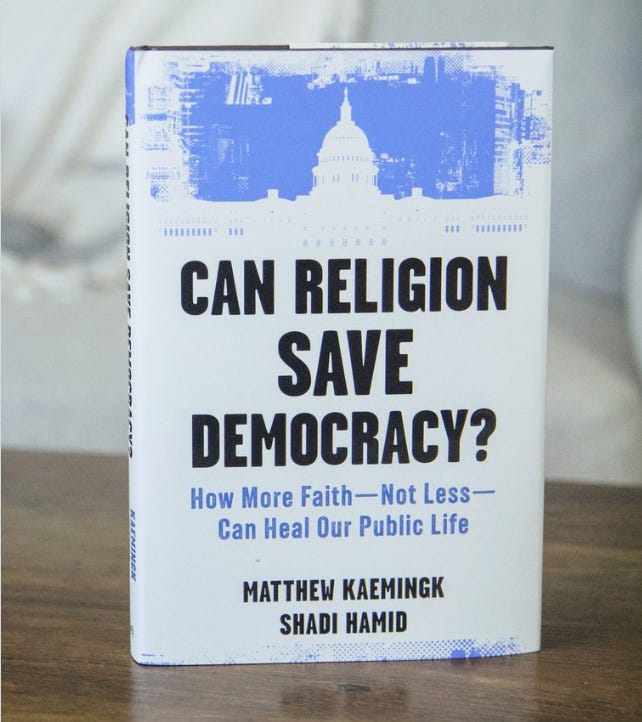
Below you’ll find the first excerpt from the preface of the book courtesy of our publisher Brazos Press. Hope you enjoy it!
We reflect on how the conflicts over immigration in Europe and the battle over national identity in the Middle East during the Arab Spring offered a dark preview of what was to come in the United States.
But it’s not all bad news. Some polarization in a democracy as chaotic and unwieldy means that we’re alive and healthy — citizens should have foundational disagreements over what it means to be a nation. The only question is how to channel those disagreements more constructively, and here we think religion can actually, and perhaps counterintuitively, be a force for good.

Thanks for this important provocation. Your causal claim requires more care: Politics has not become fanatical simply because Americans stopped attending church; many churches themselves have become classrooms of the culture war. Religion can humble political certainty, teach forgiveness, and limit what politics can accomplish—but it can also bless tribal loyalty and turn opponents into enemies of God. More religion will not necessarily save democracy. Religious communities capable of criticizing their own side might.